
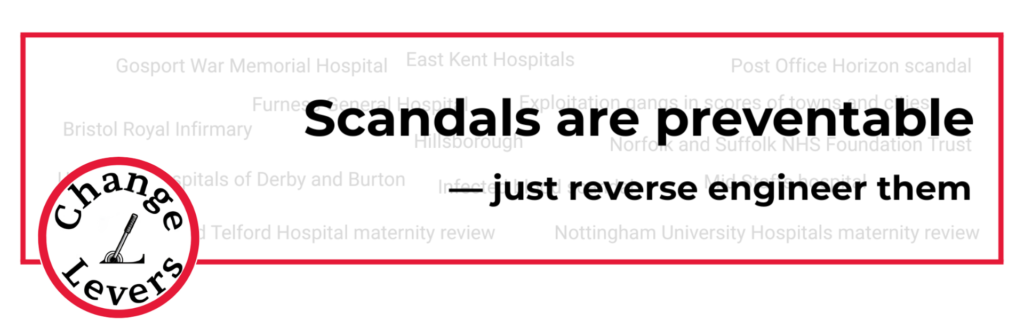
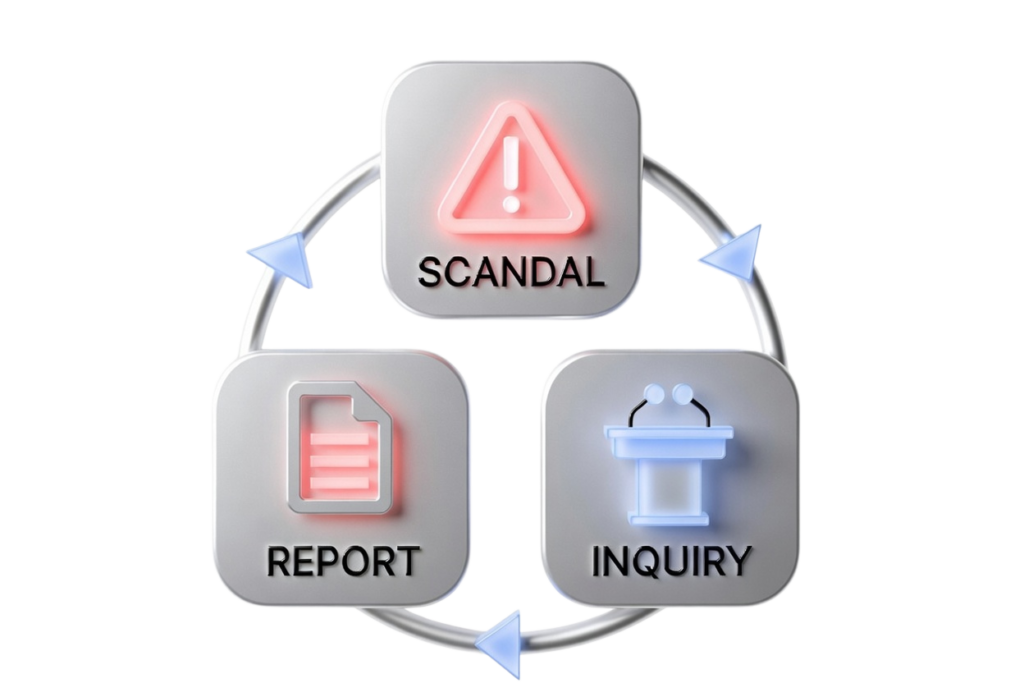
The Scandal Cycle I’ve Seen My Whole Life
I had watched the same pattern for years.
Scandals would erupt. Inquiries would follow. Reports would be written. Promises would be made… and then, after a while, the next one would appear. As regular as clockwork.
Most of that time I was in the private sector. Then I moved into the public sector full of optimism, believing I was joining something bigger — organisations providing important services to society, guided by law and regulations, meant to set standards and serve the public.
What I found instead first surprised me, then shook me, and eventually made me leave.
I encountered poor attitudes and petty misconduct that, in some cases, escalated into more serious behaviour — including theft from the organisation and even from the very people we were supposed to serve. One colleague even boasted of going to a building so he could spy on a woman in a nearby building as she undressed and had sex. Not everyone was involved in misconduct, but enough were to create a toxic undercurrent. It often felt as though no one was in charge; we seemed unmanaged, dysfunctional even. Conduct and behaviour appeared to be treated as personal choices rather than organisational responsibilities.
What astonished me most was the response when I raised concerns. No one — at any level or rank — was willing or able to act. Despite repeated attempts to get support, I was met with only platitudes, policies, excuses, or silence.
I could not reconcile my duty to our customers with the prevailing inaction. After a while it made me very unwell. I resigned.
What else could I do?
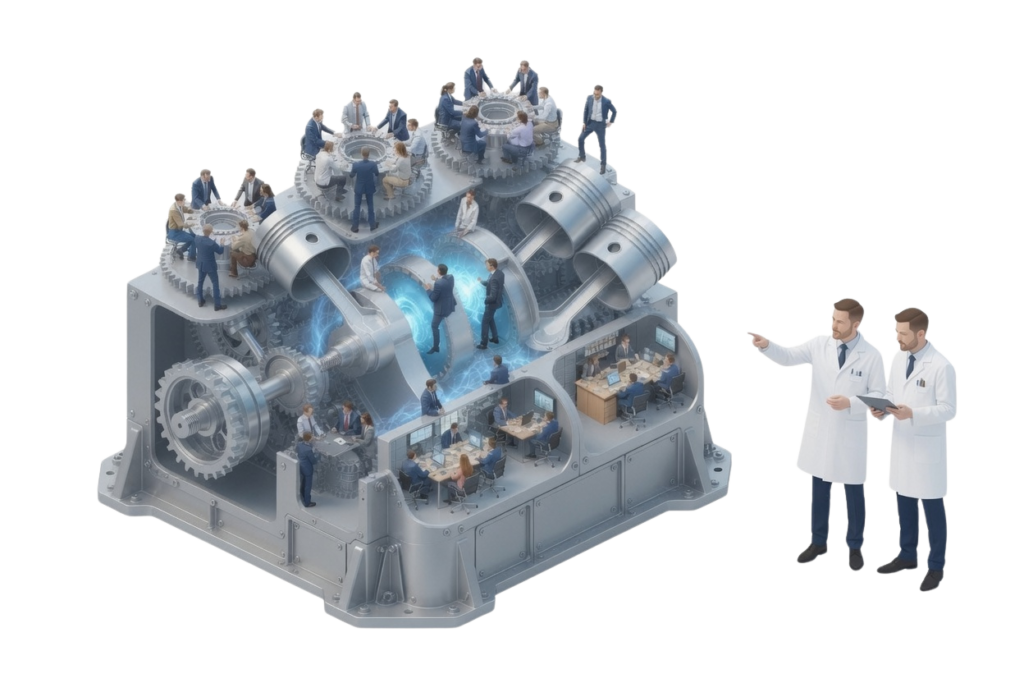
Reverse-Engineering the Scandals
I was ill for a long time after I left.
Eventually my thoughts turned to understanding what had happened.
It made no sense, as I believed it was a straightforward right-versus-wrong issue.
I studied and tried to learn. To understand. I looked first at the public sector’s structures and ways of working. As I dived deeper I looked at what happens when things go wrong — and that path leads straight to the scandals: Hillsborough, Mid Staffs, Gosport, and many others.
I started trying to understand why they had happened. I read inquiry reports, each documenting avoidable harm and lost lives. I compared, checked, examined and re-examined. Slowly the picture became clear: the same forces behind the unchecked misconduct I had witnessed were the same forces at the heart of every UK public-sector scandal.
I saw the same pattern again and again.
Someone was always trying to raise the alarm.
No one could — or would — listen.
People like Maggie Oliver, Julie Bailey, Alan Bates, Stephen Bolsin, and many others whose names never became public. The environments were different — hospitals, policing, the Post Office — but the problem was the same. People always spoke up. Whether they were listened to or silenced was a choice. And the consequences of that choice could be catastrophic.
Through reverse-engineering I began to see other commonalities and themes.
This knowledge turned something personal into something far bigger and more urgent. Because once you understand the dynamics that allow these failures to keep repeating, you realise something important:
Scandals are preventable.
They can be stopped.
And by putting the right measures in place to stop them, the by-product is safer, stronger organisations that actually protect the people they serve.
The Invisible Forces at Work
After reverse-engineering the scandals, one thing became clear.
The same patterns kept appearing because the same forces keep shaping the workplaces in which they happen.
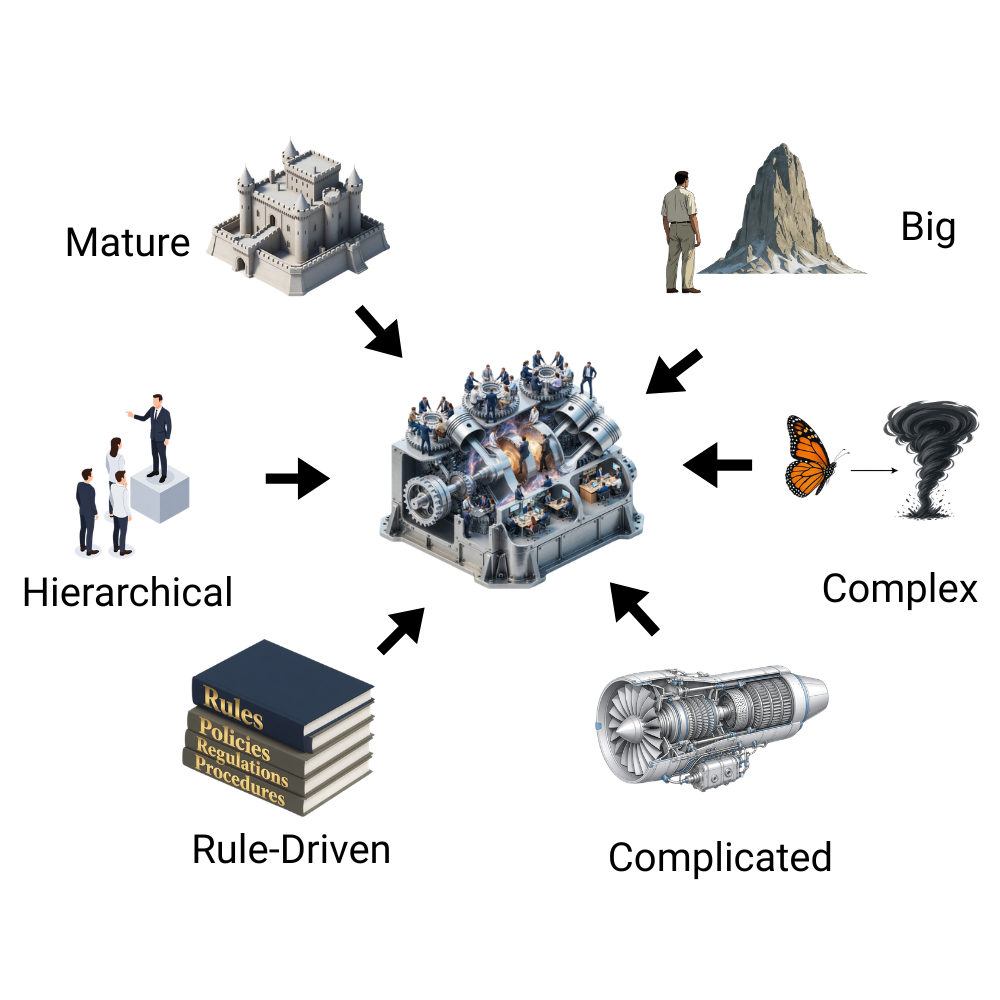
These organisations sit inside six powerful forces.
Mature
They are mature, often staffed by long-serving people who have seen and heard a great deal. Relationships are deep, wide and complex.
Hierarchy
A clear pecking order exists. Everyone knows their place in it. Status and authority matter — and people do as they are told.
Rule-Driven
Layers of rules, policies and procedures govern almost every action. Compliance is non-negotiable.
Complicated
Multiple departments, ranks, locations and budgets. Each with its own priorities, focus and leadership.
Complex
When these separate parts interact, outcomes can become unpredictable — and sometimes make little sense at all.
Big
These organisations are often large.
Many UK hospital trusts exceed 10,000 staff. The Metropolitan Police alone has more than 45,000 personnel.
These six forces touch everything: decision-making, culture and day-to-day operations.
In doing so they shape the work environment — and people act according to the environment they are in.
Together they are so powerful that, left unchecked, they can damage — or crush — trust.
In the public sector that can be deadly.
This is why scandals happen in organisations, some of which employ hundreds or even thousands of professional people.
This is why problems arise in organisations and no one is able or willing to take ownership of them early on, allowing the issue to escalate into a scandal that harms or even kills people.
This is why staff so often stay silent even when they know they should speak up.
These are not knowledge problems. People know they should deal with small problems before they get bigger. They know they should speak up if they see or know that something is wrong. People understand this.
The reason people make these decisions is based on the environment they work in, created by those powerful forces.
Once you see these forces clearly, the scandals stop looking like isolated failures.
They start looking like predictable outcomes of the systems we have built.
Understanding them is the first step to changing them.
When you prevent scandals, the byproduct is safer, stronger organisations.
Three practical steps.
We now know the six forces that shape public-sector workplaces.
We know how they can crush trust, negatively affecting how staff work and the choices they make.
And we know that scandals are preventable — because we can reverse-engineer them.
So what do we actually do?
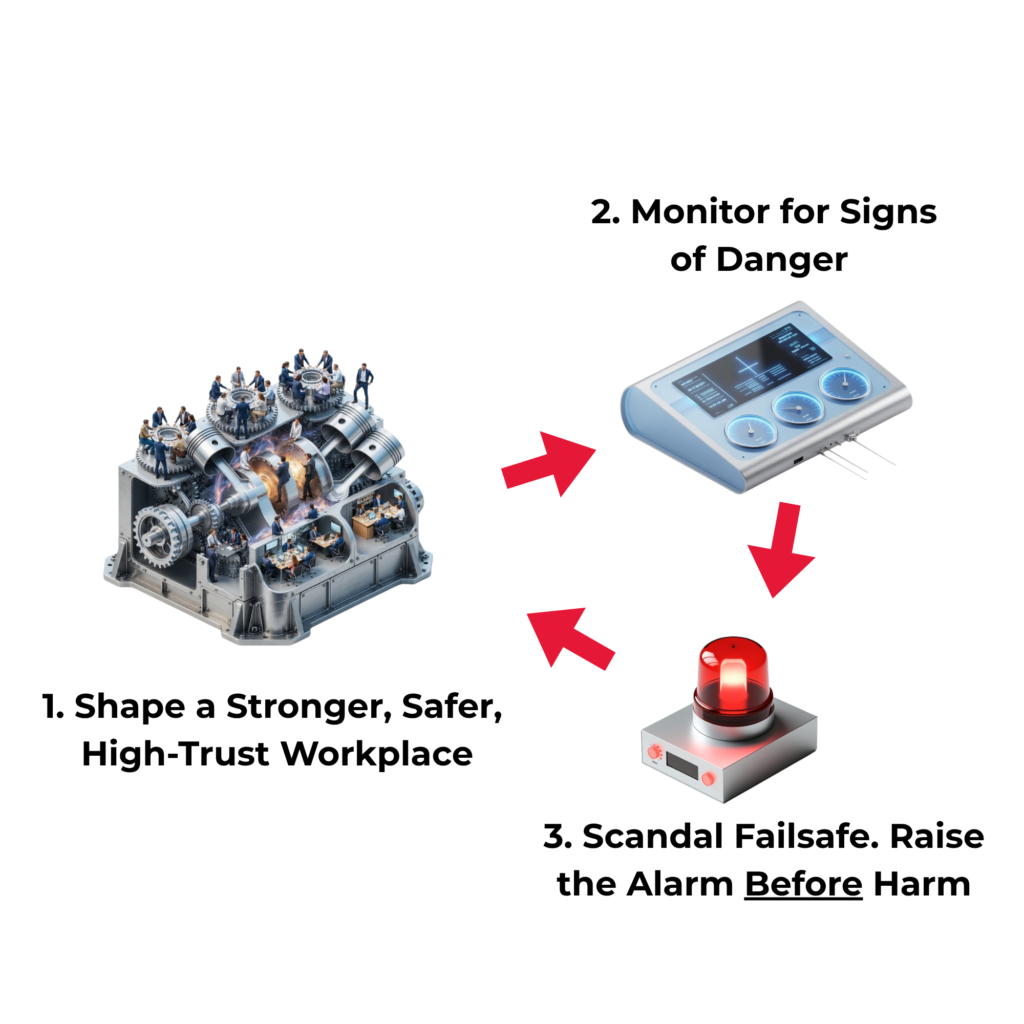
Shape a stronger, safer, high-trust workplace
We neutralise the impact of those six forces by deliberately strengthening trust.
Using the Circle of Trust, we create, repair and sustain high levels of trust.
A high-trust environment is more productive, more resilient, and far safer for both staff and the people they serve.
Monitor for signs of danger
We put simple, clear measures in place that give early warning when the work environment starts to deteriorate.
Problems become visible while they are still small and manageable.
Scandal Failsafe — raise the alarm before harm
A deliberate failsafe mechanism that makes it possible — and safe — to call for help the moment danger appears.
This is the final barrier that stops problems turning into scandals and people being harmed.
What happens next is up to you
If you lead, manage or work in a public-sector organisation and want to build a safer, stronger workplace, get in touch.
Just click the button to arrange a chat.